







African News
Nigeria Records Sharp Drop in Inflation Following CPI Update

Nigeria’s inflation rate slowed to 15.10 percent in January 2026, offering early signs of relief for households after months of high prices, according to new figures released by the National Bureau of Statistics.
The latest Consumer Price Index report, published on Monday, showed that the all-items index dropped to 127.4 points in January. This represents a fall of 3.8 points from December 2025. The decline follows the recent rebasing of the CPI and was largely driven by a sharp drop in food prices.
The Statistician-General of the Federation and Chief Executive Officer of the National Bureau of Statistics, Prince Adeyemi Adeniran, said headline inflation eased slightly on a year-on-year basis. It declined by 0.05 percentage points from 15.15 percent in December 2025 to 15.10 percent in January 2026. Compared with January 2025, when inflation stood at 27.61 percent, the rate fell significantly by 12.51 percentage points.
The Bureau said the month-on-month headline inflation rate for January 2026 was minus 2.88 percent. This was 3.42 percentage points lower than the 0.54 percent recorded in December 2025, indicating a broad reduction in prices within the month under review.
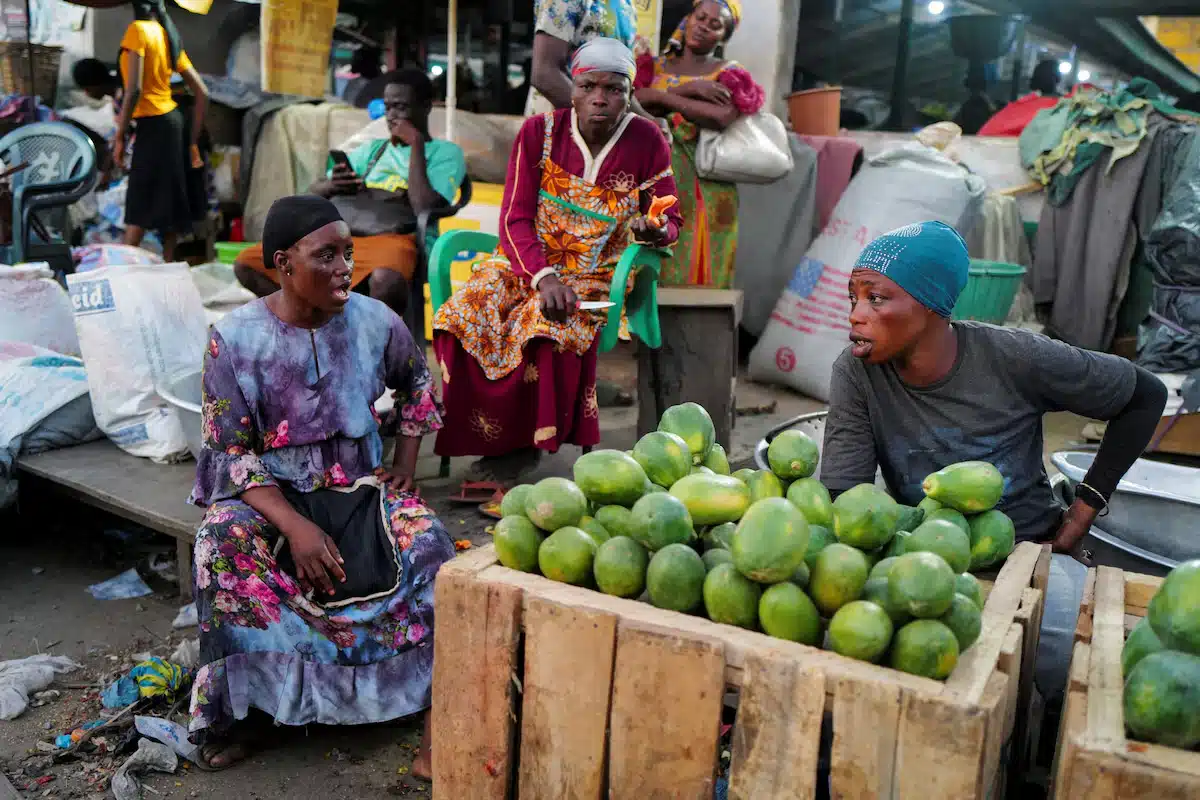
Food inflation provided the strongest relief. On a year-on-year basis, food inflation slowed to 8.89 percent. On a month-on-month basis, it contracted sharply by 6.02 percent, reflecting lower prices for several staple items across the country.
The Bureau linked the drop to decreases in the average prices of yams, eggs, green peas, groundnut oil, soya beans, palm oil, maize, guinea corn, beans, beef, melon, cassava and cow peas, among others. The fall in these prices helped ease pressure on household spending.
However, inflation remained uneven across states. Benue recorded the highest year-on-year headline inflation at 22.48 percent, followed by Kogi at 20.98 percent and the Federal Capital Territory, Abuja, at 19.25 percent. In contrast, Ebonyi posted the lowest rate at 8.72 percent, while Katsina recorded 8.94 percent and Imo 10.61 percent, highlighting continued regional differences in price movements.