News
Trump Says Iran ‘Desperate’ For Deal As Tehran Denies Negotiations Amid Escalating War

US President Donald Trump has claimed that Iran is eager to strike a deal to end nearly four weeks of intense conflict, directly contradicting statements from Iran’s top diplomat, Abbas Araqchi, who insists there are no negotiations underway.
The conflicting narratives underscore deep uncertainty surrounding diplomatic efforts as the war’s economic and humanitarian consequences ripple across the globe.
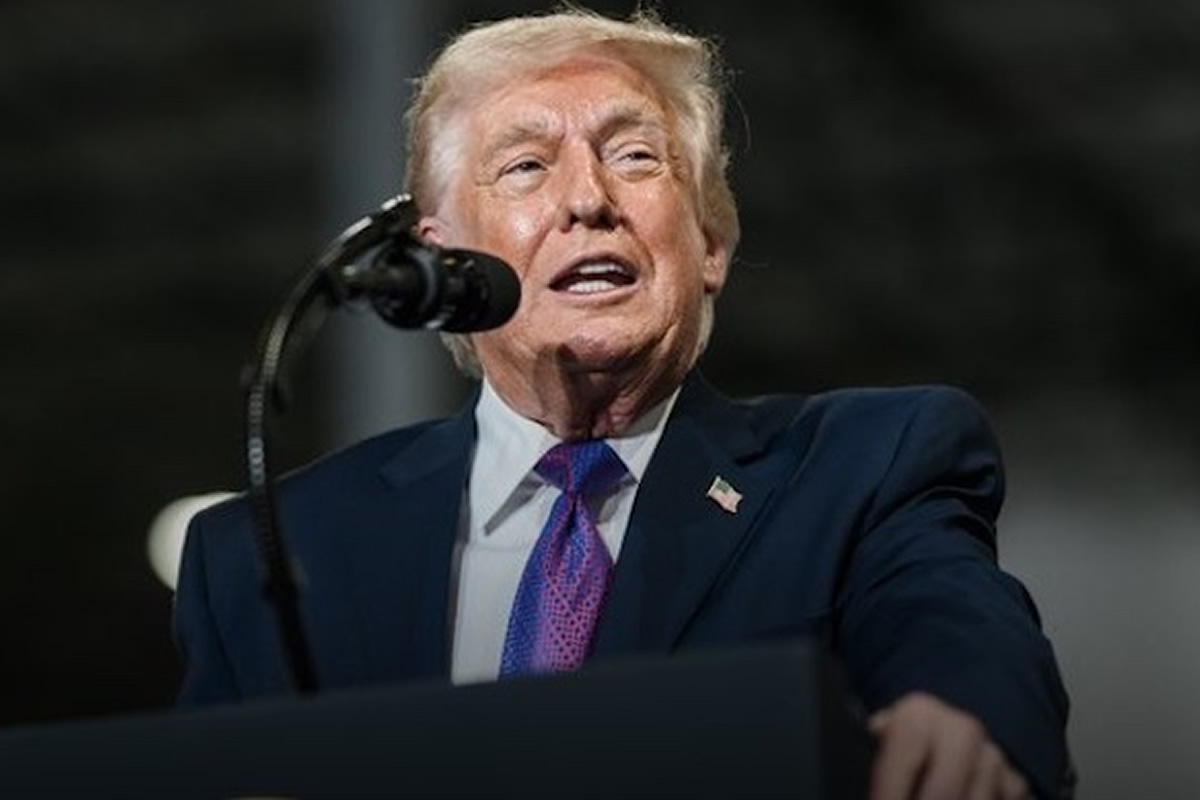
Speaking on Wednesday in Washington, Trump said Iranian leaders were quietly seeking a resolution.
“They are negotiating, by the way, and they want to make a deal so badly, but they’re afraid to say it because they will be killed by their own people. They’re also afraid they’ll be killed by us,” he said.
However, Araqchi rejected the claim, maintaining that while indirect messages have been exchanged through intermediary countries, no formal talks have taken place.
“Messages being conveyed through our friendly countries and us responding by stating our positions or issuing the necessary warnings is not called negotiation or dialogue,” he said in a state television interview.
The dispute over diplomacy comes as the fallout from the conflict continues to intensify globally. The effective closure of the Strait of Hormuz—a key artery for roughly a fifth of the world’s oil and gas—has triggered what analysts describe as the worst energy shock in history.
Industries worldwide, from airlines to food retailers, are grappling with surging costs, supply chain disruptions and weakening demand. Governments are now considering emergency support measures reminiscent of the COVID-19 pandemic.
The humanitarian toll is also mounting. The World Food Programme warns that tens of millions could face acute hunger if the conflict drags into the coming months, while farmers and fishers struggle with severe diesel shortages.
Amid the crisis, a 15-point US proposal aimed at ending the war has reportedly been sent to Tehran through Pakistan. The plan includes reopening the Strait of Hormuz, curbing Iran’s nuclear and missile programmes, and cutting funding to regional allies.
While the White House has not disclosed details, Israeli officials remain skeptical Tehran will accept the terms and are wary Washington could make concessions. Israel is also pushing to retain the right to conduct pre-emptive strikes under any agreement.
Diplomatic efforts appear to be converging around Pakistan as a potential venue for talks, though Iranian officials say no arrangements have been finalised.
The war has already reshaped Iran’s leadership. Supreme Leader Ali Khamenei was killed in an Israeli strike at the outset of hostilities and succeeded by his son, Mojtaba Khamenei, who has reportedly been wounded and has not appeared publicly since.
Meanwhile, military operations continue unabated. The US and Israel have launched extensive strikes across Iran, with U.S. Central Command chief Brad Cooper stating that more than 10,000 targets have been hit, significantly degrading Iran’s military capabilities.
Missile and drone exchanges across the Gulf persisted on Thursday, as Israel reported fresh Iranian launches following another wave of strikes.
Financial markets, which briefly rallied on hopes of a ceasefire, have turned volatile again. Oil prices resumed their upward climb as optimism faded.
A recent Ipsos poll shows domestic pressure building on Trump, with 61% of Americans opposing US military strikes in Iran.
The Pentagon is also weighing further escalation, with plans to deploy additional airborne troops to the Gulf, potentially expanding US military options.
As tensions rise, Antonio Guterres issued a stark warning about the wider regional war.
“The world is staring down the barrel of a wider war,” he said.
“It is time to stop climbing the escalation ladder – and start climbing the diplomatic ladder.”