







Latest News
Bank of England To Replace Churchill On UK Banknotes With Wildlife in Major Cash Redesign

The Bank of England has announced plans to redesign British banknotes, replacing prominent historical figures such as Winston Churchill with images of wildlife native to the United Kingdom.
The decision marks a major shift in the design of British currency, ending more than five decades during which notable figures including Jane Austen featured on the reverse side of pound notes.
The central bank said the next generation of £5, £10, £20 and £50 notes would highlight animals and natural elements from across the country after a public consultation showed strong support for a nature theme.
According to the Bank of England, nature emerged as the most popular option among roughly 44,000 consultation responses, while historical figures ranked third. The bank said the new designs would aim to reflect images that symbolize the UK, resonate with the public and avoid divisive themes.
However, the move has the potential to spark political controversy at a time of heightened debate over national identity and historical symbols in Britain.
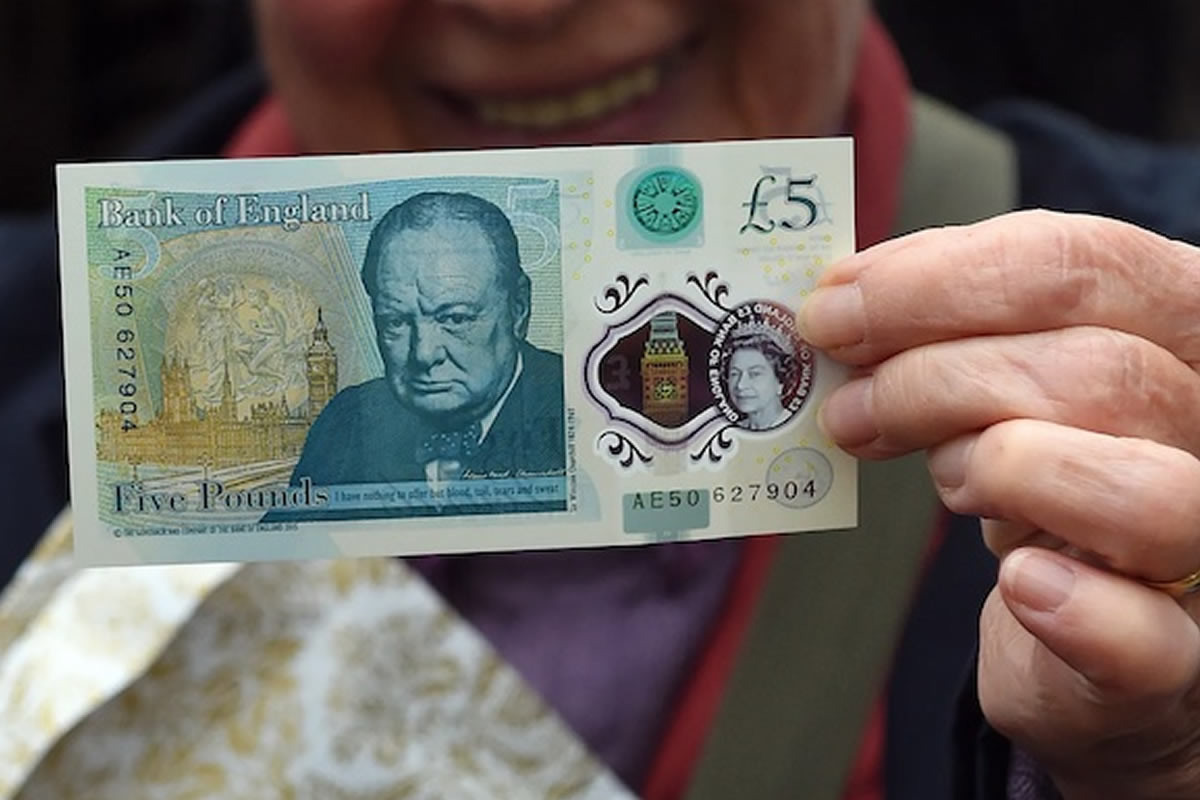
Churchill, widely regarded as one of the UK’s most significant leaders, has long been closely associated with Conservative political identity. The wartime prime minister replaced social reformer Elizabeth Fry on the £5 note a decade ago, a change that at the time drew criticism for removing the only woman featured on British currency.
The issue of national symbols has also become increasingly sensitive in recent years. During anti-racism protests linked to the Black Lives Matter demonstrations in 2020, Churchill’s statue in London was boarded up amid wider debates about Britain’s imperial history and public monuments.
Some Conservative politicians previously criticised the idea of removing historical figures from banknotes when the consultation was launched, describing the proposal as unnecessary political correctness.
Right-wing political figures have also weighed in. Nigel Farage and members of Reform UK have frequently criticised the Bank of England on economic issues, while allies accused the government of sidelining national icons despite the fact that the redesign decision rests with the central bank, not the Treasury or Chancellor Rachel Reeves.
Under the planned redesign, wildlife imagery will also replace other historical figures currently featured on banknotes, including painter J. M. W. Turner and mathematician Alan Turing. The front side of the notes will continue to display King Charles III, who ascended to the throne in 2022.
The Bank of England said the new designs may also incorporate plants, landscapes and other natural elements alongside wildlife imagery.
Victoria Cleland, the bank’s chief cashier, said the theme provides creative opportunities while improving note security. “Nature is a great choice from a banknote authentication perspective and means we can showcase the UK’s rich and varied wildlife on the next series,” she said, adding that dynamic features could be introduced into the designs.
“We could, for example, have a bird with its wings flapping. We could have a deer running,” Cleland said in an interview.
The redesign follows a series of changes to British currency in recent years. Beginning in 2016, the Bank of England started replacing paper banknotes with more secure polymer versions that are harder to counterfeit. Paper £20 and £50 notes ceased to be legal tender in 2022, while paper £5 and £10 notes were withdrawn earlier.
Although banknotes remain in circulation, their use has declined sharply as digital payments grow. According to UK Finance, cash accounted for 48 percent of payments in 2014 but fell to just 9 percent by 2024, with card and mobile transactions increasingly dominating everyday purchases.
Images of historical figures first appeared on British banknotes in 1970, featuring individuals such as William Shakespeare, Charles Darwin, and Adam Smith.
When Churchill was introduced to the £5 note in 2013, then Bank of England governor Mervyn King said it was fitting to place the wartime leader on what he described as Britain’s most popular banknote. At the time, he suggested the fiver might even come to be known as “the Winston” a nickname that never caught on.