



Latest News
National Assembly Raises 2026 Budget To N68.3trn Amid Oil Windfall, Approves Fresh $6bn Borrowing

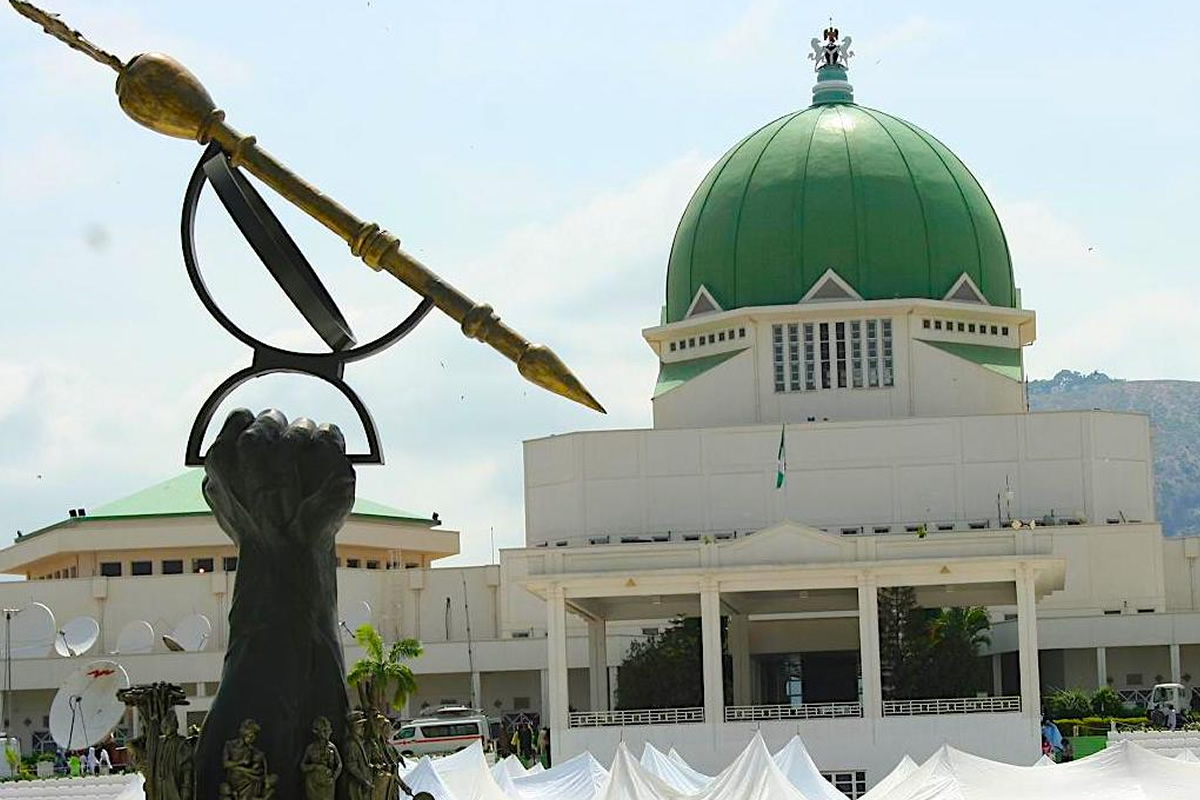
Awash with Gulf oil windfall from US-Israel war on Iran, the National Assembly on Tuesday significantly altered Nigeria’s fiscal trajectory for 2026, raising the Appropriation Bill to N68.323 trillion and simultaneously advancing legislative processes to approve fresh external borrowings totalling$6 billion requested by President Bola Tinubu.
The oil price benchmark for the 2026 budget was $64.85 per barrel, with an assumed daily oil production of 1.84 million barrels per day.
But since the commencement of the war in the Middle East February 28, theprice of Brent crude has risen sharply to $115 per barrel, with projections suggesting a sustained upward trend, as both sides in the Middle East conflict continue to bomb each other’s oil facilities.
Nigeria is currently raking in significant revenue from the spike, which is currently twice the budget benchmark.
However, instead of the country’s lawmakers legislating to save the extra revenue for the rainy day, they embarked yet again on a spending binge.
The sweeping decisions, taken at plenary of both chambers of the National Assembly following the presentation and consideration of the Joint National Assembly Committee on Appropriation report and fresh presidential correspondences, underscored an aggressive fiscal expansion strategy. It was said to be aimed at stabilising the economy, addressing legacy obligations, and unlocking infrastructure development.
Though, concerns persisted over rising public debt and implementation efficiency.
Tinubu also sought the approval of the House of Representatives to obtain a $5 billion external loan from First Abu Dhabi Bank of the United Arab Emirates.
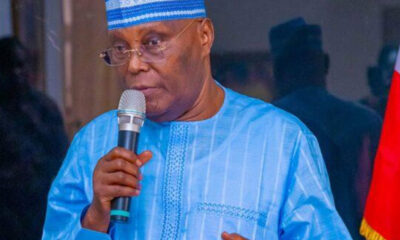
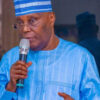
Reacting to the fresh loan request, former Vice President and chieftain of African Democratic Congress (ADC), Atiku Abubakar, expressed concern over the senate approval, less than four hours after its presentation.
The revised budget represented an increase of over N9 trillion from the N58.18 trillion initially proposed by the president in December 2025.
The joint committee in its report stated that the upward adjustment was necessitated by the need to accommodate outstanding commitments from previous fiscal cycles, strengthen critical sectors, and align the budget with prevailing economic realities.
A breakdown of the approved N68.323 trillion fiscal plan showed that N4.799 trillion was allocated to statutory transfers, N15.809 trillion to debt servicing, N15.427 trillion to recurrent (non-debt) expenditure, and a substantial N32.287 trillion devoted to capital projects, a move widely interpreted as a push to stimulate growth through infrastructure investment.
Central to the increase was the incorporation of N7.71 trillion in outstanding capital obligations from the 2025 budget, many of which lawmakers said could not be executed due to revenue shortfalls and bureaucratic bottlenecks.
The joint committee stated that nearly 70 per cent of capital projects in the 2025 budget were affected, necessitating a rollover to prevent abandonment and cost escalation.
In addition to clearing legacy liabilities, the legislature approved fresh allocations targeting strategic national priorities.
Among them was N478.6 billion as federal government equity contribution under the Ministry of Finance Incorporated framework to support presidential legacy rail projects spanning Lagos, Kano, Kaduna and Ogun States.
The provision also covered feasibility studies for new urban rail systems in Enugu and Maiduguri, as well as upgrades to existing narrow-gauge lines.
Furthermore, infrastructure planning received N8.96 billion for feasibility studies on the Calabar–Maiduguri corridor and the proposed Maiduguri–Sokoto superhighway under the Tinubu National Beltway Initiative, designed to enhance regional integration and boost trade connectivity.
The health sector also secured a major boost, with an additional $344.83 million (about N482.76 billion) earmarked for priority interventions tied to bilateral agreements, aimed at strengthening healthcare infrastructure and service delivery nationwide.
In a move linked to preparations for the 2027 general election, the judiciary received enhanced funding, including N98.5 billion for the Court of Appeal, N36.7 billion for the Supreme Court, and N268.54 billion to expand judicial capacity through the appointment of additional judges and justices.
Lawmakers stressed that a stronger judiciary was essential for timely adjudication of election disputes and the sustenance of democratic governance.
To finance the enlarged budget, the National Assembly adopted a mix of revenue measures and borrowing.
They included a $10 per barrel increase in the oil benchmark, expected to generate an additional N2.592 trillion, and improved revenue projections from the telecommunications sector.
Specifically, MTN Nigeria was projected to contribute N724 billion in company income tax, while Airtel Nigeria was expected to remit N150 billion, bringing the total telecom sector contribution to about N874 billion.
Despite these measures, the legislature approved an increase in external borrowing by N6.163 trillion to bridge the financing gap, insisting that the debt level remains within manageable limits.
In parallel with the budget approval, the senate considered separate presidential requests for external loans amounting to $6 billion, further signalling a reliance on foreign financing to support the 2026 fiscal framework.
One of the requests sought approval for a Structured Total Return Swap financing programme of up to $5 billion with First Abu Dhabi Bank in the United Arab Emirates.
The facility, to be drawn in tranches, was designed to enhance liquidity, support budget implementation, refinance existing debts, and fund critical infrastructure.
Tinubu, in his correspondence, acknowledged that the borrowing would increase Nigeria’s public debt stock, currently estimated at about $115 billion, with debt servicing projected at N20.5 trillion in 2026.
He, however, assured lawmakers that the phased structure of the facility would help manage its impact and ensure sustainability.
The president also requested approval to issue naira-denominated securities as collateral and to meet margin obligations in United States dollars as they arise.
In a separate request, Tinubu sought legislative backing for a $1 billion loan facility supported by UK Export Finance and arranged by Citibank London and other partners to rehabilitate the Apapa and Tin Can Island ports in Lagos.
Describing the ports as critical national assets facing near engineering failure after decades of use, the president said the project would restore operational efficiency, improve safety, and reposition Nigeria as a competitive maritime hub.
He stated that inefficiencies at the ports had led to cargo diversion to neighbouring countries, undermining Nigeria’s trade competitiveness and revenue potential.
The rehabilitation project, to be executed by the Nigerian Ports Authority (NPA) under an Engineering, Procurement, Construction plus Finance model, is expected to span up to 14 years, including a 48-month availability period.
Senate President Godswill Akpabio, who read the communications in the senate, referred the requests to the relevant committees and urged expedited consideration, citing their urgency and national importance.
The senate subsequently entered a closed-door session to deliberate on the proposals, with lawmakers invoking procedural rules to fast-track consideration.
In a third correspondence, Tinubu formally transmitted the proposed N9 trillion adjustment to the 2026 budget, outlining its objectives, including the regularisation of legacy debts, injection of fresh capital into priority sectors, and alignment of financing strategies with revised expenditure plans.
He emphasised that the adjustments were designed to restore fiscal discipline by ensuring that current revenues were largely applied to current expenditures, while legacy obligations were transparently accounted for.
Meanwhile, the National Assembly expressed concern over persistent implementation challenges that plagued previous budgets, particularly delays in fund releases and administrative inefficiencies.
To address that, lawmakers recommended stronger collaboration between the executive and legislature, enhanced oversight, and strict adherence to timelines to ensure that budgetary provisions translated into tangible outcomes.
They also approved the extension of the 2025 Appropriation Act to June 30, 2026, to allow for the completion of ongoing projects captured under the previous fiscal cycle.
Chairman of Senate Committee on Appropriations, Senator OlamilekanAdeola, said the harmonised report reflected a balance between fiscal responsibility and developmental needs, commending stakeholders for their contributions.
Adeola described the 2026 budget as a critical instrument for consolidating macroeconomic stability, improving the investment climate, creating jobs, and reducing poverty.
The fiscal plan, themed, “Budget of Consolidation, Renewed Resilience and Shared Prosperity,” is expected to drive inclusive growth while addressing structural constraints across key sectors, including security, infrastructure, health, and education.
However, some senators in their various comments said the success of the ambitious budget will depend largely on disciplined implementation, revenue realisation, and prudent debt management, as Nigeria navigates a complex economic landscape marked by fiscal pressures and rising development needs.
In the House of Representatives, Tinubu’s request was contained in a letter read on the floor at plenary by the speaker, Hon. Abbas Tajudeen.
The president added that the proposed loan was in line with the Debt Management Office Act, 2003, and aimed at establishing a structured financing programme to support government spending.
Tinubu stated, “The loan will be released in phases and used to fund budget implementation, invest in priority infrastructure, and refinance existing debts considered more expensive.”
In a separate letter read on the floor of the House by the speaker, Tinubu said the funding, arranged by Citibank in London, would restore ports that had reached critical levels of infrastructure failure after decades of operation.
Meanwhile, Atiku expressed concern over reports that Senate approved the fresh $6 billion external loan within a record time—reportedly less than four hours after its presentation.
Atiku, in a statement issued by his Senior Special Assistant on Public Communication, Phrank Shaibu, described the development as not just troubling but alarming.
He stated that a decision of such profound national consequence, “one that will further burden an already strained economy and mortgage the future of generations yet unborn, cannot be treated with such reckless urgency.”
He added, “What Nigerians have witnessed is not legislative diligence, but a disturbing erosion of oversight responsibility.”
He stressed that the National Assembly was not designed to function as a mere rubber stamp but as a constitutional safeguard meant to interrogate, scrutinise, and protect the interests of the Nigerian people.
Atiku stated, “The senate, which ought to serve as a constitutional safeguard, has instead reduced itself to a conveyor belt—processing requests of grave national consequence without due diligence.
“Borrowing decisions that will bind generations yet unborn cannot, and must not, be treated with this level of casual urgency.
“Where was the debate? Where was the rigorous analysis? Where was the accountability?”
He warned that approving a multi-billion-dollar borrowing request in record time, without visible scrutiny, raised serious questions about due process and the commitment of the legislature to its constitutional duty.
While the objectives might appear routine on the surface, Atiku warned that they exposed deeper structural weaknesses in the country’s fiscal management.
He stated, “Resorting to fresh borrowing to service existing debts, plug budget gaps, and meet routine obligations is not a strategy—it is a dangerous cycle. It reflects a troubling absence of fiscal discipline, clear prioritisation, and sustainable economic planning.”
He further anchored his concerns on emerging fiscal indicators, stating that between January and February 2026, the World Bank reported that Nigeria’s exposure to the International Development Association (IDA) had risen to $18.7 billion, placing the country among the largest recipients of concessional loans globally.
He explained, “In March 2026 alone, the President is requesting an additional $6 billion external loan, even as the Debt Management Office continues aggressive domestic borrowing through high-volume bond auctions, as evidenced by the March 2026 FGN Bond Offer Circular, largely to finance immediate government obligations and service existing debt.”
According to Atiku, the pattern reflects an unsustainable borrowing trajectory that places the country on a dangerous fiscal path.
The former vice president questioned whether the development signalled a deliberate attempt to mortgage the future of the country.
“Because that is what it suggests,” he added.
“What does a government that appears to be preparing for electoral rejection in 2027 intend to do with an additional $6 billion in borrowed funds on top of the mounting obligations it has already accumulated in just the first quarter of 2026?” he stated.
Atiku emphasised that at a time when Nigeria’s debt profile continued to rise and debt service consumed a significant portion of national revenue, “prudence not haste should guide fiscal decisions.”
He said, “Borrowing is not inherently wrong, but reckless borrowing, enabled by legislative complacency, is dangerous.”
He added, “The speed of the approval suggests a troubling sense of desperation—one that does not inspire confidence in the long-term economic direction of the country.
“Nigeria is not a private enterprise to be leveraged at will. The future of our nation cannot be signed away in a matter of hours.”
Atiku called on the senate to remember its constitutional role as a check on executive excesses, not an extension of it, insisting that Nigerians deserve transparency, accountability, and responsible governance.
He said history would record this moment and the choices made.