







News
Nigeria Disburses N2.25bn To Student Innovators, Backs Entrepreneurship Drive In Tertiary Institutions

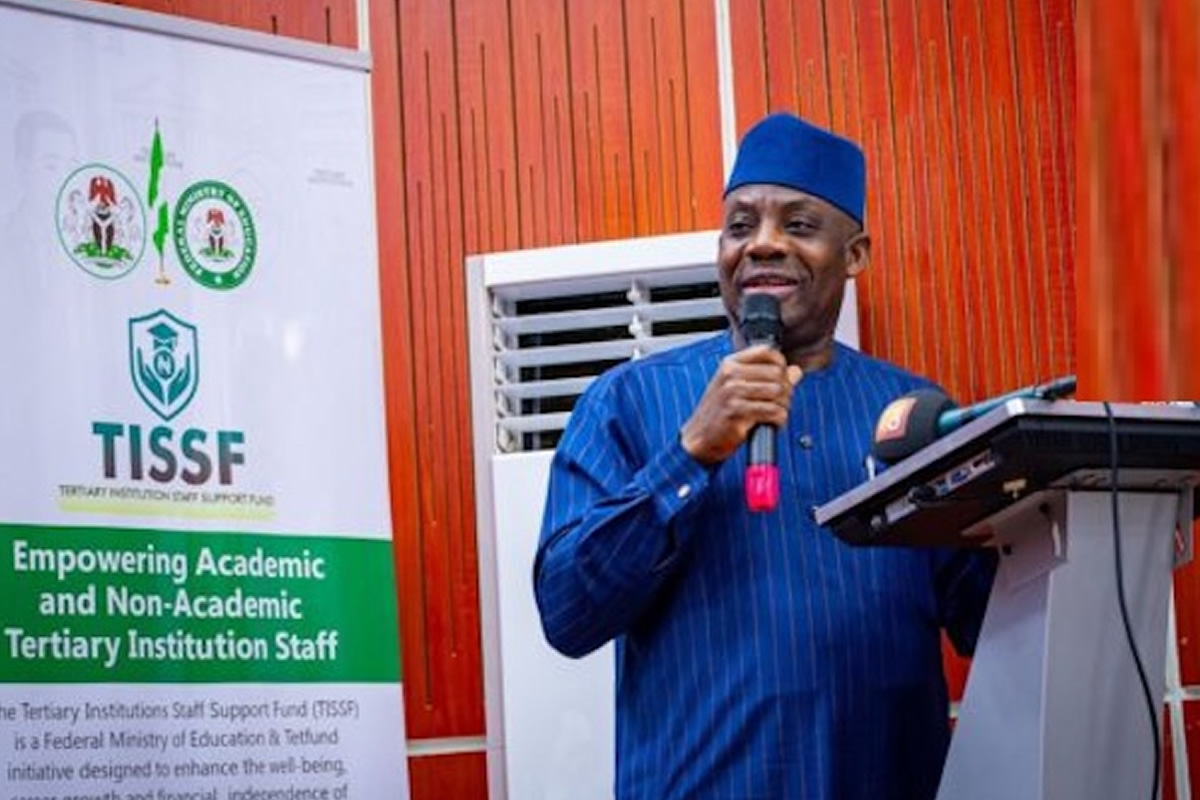
Speaking at the awards ceremony, held at the UNDP Innovation Hub, Ikoyi, Lagos, the Minister of Education, Dr. Tunji Alausa, explained that the programme represented a major shift in Nigeria’s education policy, aimed at transforming tertiary institutions from centres of certification into hubs of innovation, entrepreneurship and economic development.
He described the initiative as a transformative student program that would unlock the innovative potential of Nigerian students and position them as job creators.
“Today is not just another program event. Today, we are activating a new future and a new vision for Nigerian students. For too long, tertiary institutions have been seen primarily as centers of certification. Our institutions must now become centers of innovation and agents of enterprise,” he stated.
He added that under the scheme, selected student innovators would receive equity-free funding, structured incubation, mentorship and access to digital tools to scale their ideas into viable businesses.
According to him, the programme attracted more than 30,000 applications from over 400 tertiary institutions nationwide, demonstrating the abundance of innovative ideas among Nigerian students.
“We have received over 30,000 applications from more than 400 tertiary institutions. Nigeria is not lacking in ideas, what we have been lacking is structured support. With the Student Venture Capital Grant, that gap is now closed,” he stated.
The minister noted that the initiative would help students move from ideation to commercialisation, converting campus-based innovations into scalable enterprises capable of driving national economic growth.
He added that beneficiaries would not only develop solutions to societal challenges but also contribute to job creation and strengthen Nigeria’s innovation ecosystem.
“With innovation and entrepreneurial skills, our graduates will become job creators rather than job seekers. This is the pathway to harness Nigeria’s youthful population and transform it into a formidable human capital base,” he said.
Alausa further disclosed that the programme was designed as a national intervention to support the incubation of student ideas into products and services with real-world impact.
He acknowledged the role of development partners, including the United Nations Development Programme, Google and the Bank of Industry (BoI) for supporting the initiative.
He urged students across the country to leverage the opportunity, noting that many of the world’s most successful companies began as ideas within academic institutions.
The minister added that the initiative would build a pipeline of young entrepreneurs, position Nigeria as a hub for innovation and channel the energy of youths towards sustainable economic growth.
In his remarks, the Minister of Communications, Innovation and Digital Economy, Dr. Bosun Tijani, said Nigerian universities must move beyond traditional teaching to become hubs of innovation and drivers of national development.
He noted that no country could attain productivity and prosperity without a university system committed to generating ideas and solutions for societal progress, stressing that nations leading in science and technology are also among the most prosperous.
“There is literally no nation that is productive, progressive and prosperous without a university or academic sector that understands its role. It is not just about teaching, but about giving new thinking, new ideas and innovation that can move society forward,” he said.
Tijani commended the Federal Ministry of Education for promoting initiatives that encourage entrepreneurship and innovation in tertiary institutions, describing them as a shift from purely academic instruction to practical problem-solving.
He urged students to focus on building sustainable solutions rather than chasing prize-winning opportunities, cautioning against becoming “prize-per-year entrepreneurs” more interested in competitions than viable businesses.
He advised participants to remain committed to their ideas, leverage access to information and embrace gradual growth.
“Believe in the principle of compounding. Do small things that add up, and they become the big thing you truly want to see,” he added.
The minister also encouraged young innovators to build businesses that create value for society, noting that long-term sustainability depends on impact. While applauding government efforts, he challenged participants to support others as they succeed, stressing that inclusive innovation is vital for national development.
Also speaking, the Minister of State for Education, Prof. Suwaiba Said Ahmad, described student entrepreneurship as a critical national strategy for job creation, innovation and sustainable economic growth.
She said entrepreneurship initiatives within tertiary institutions are essential to transforming students from job seekers into job creators capable of addressing societal challenges.
She noted that the boot camp marked not only the end of an intensive programme but the beginning of a new chapter for young innovators equipped with creativity, resilience and problem-solving skills.
Ahmad emphasised that academic knowledge alone is no longer sufficient, urging institutions to empower students to translate ideas into viable enterprises.
According to her, student entrepreneurship represents a powerful intersection between knowledge and action, moving education beyond theory to real-life problem-solving. She observed that more students are innovating and building businesses while still in school, a trend she described as necessary for a rapidly evolving economy.
She added that entrepreneurship initiatives help students develop critical skills such as creativity, resilience, teamwork and leadership, which are essential for business success and personal growth.
Student-led enterprises, she said, could drive job creation, promote innovation and support economic diversification in sectors such as agriculture, technology, health and the creative industries.