Latest News
Oyedele: Nigeria Has Shifted From Economic Decline To Stability And Investor Confidence

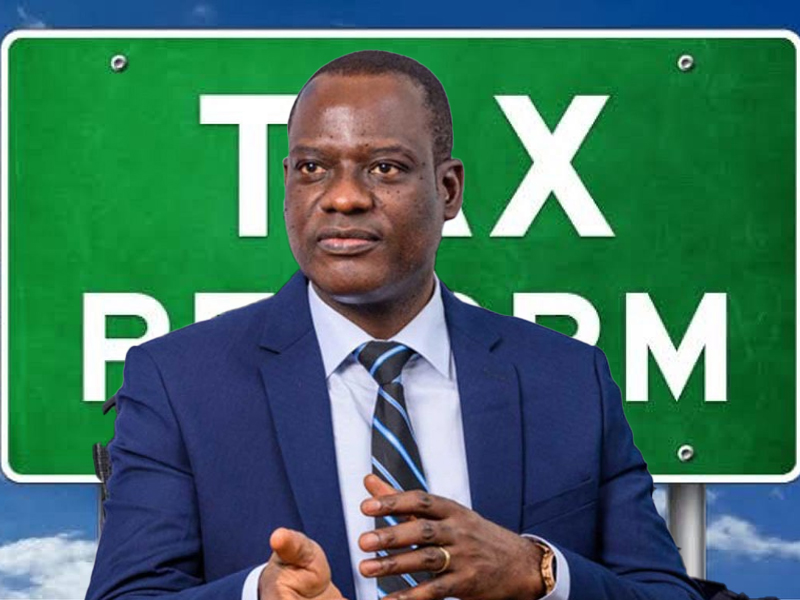
Chairman of the Presidential Fiscal Policy and Tax Reforms Committee, Mr. Taiwo Oyedele, on Monday declared that the country had moved away from rapid economic decline towards stability, growth, and restoration of investor confidence.
Oyedele said the ongoing fiscal and monetary reforms had resulted in stronger coordination among key policy actors, adding that within a “relatively short period, we have begun to make progress”.
Oyedele spoke at the opening of a two-day National Stakeholders’ Discourse on “Enhancing Fiscal Efficiency and Revenue Growth under the Nigeria Tax Act, 2025”, organised by the Revenue Mobilisation Allocation and Fiscal Commission (RMAFC) in Abuja.
He also charged policymakers to convert macroeconomic gains into tangible micro-level benefits for citizens, urging them to focus on translating positive macroeconomic outcomes into meaningful improvements at the household level.
He said one major achievement of the reforms was the redesign of the tax system to stop taxing poverty, stating that implementation of the new tax laws next year will reward small businesses and ordinary Nigerians in line with President Bola Tinubu’s directive to de-risk the business environment.
Oyedele also waded into the Memorandum of Understanding (MoU) FIRS recently signed with the French tax authority, Direction Générale des Finances Publiques (DGFiP), which was solely focused on technical assistance and capacity building, but had since been criticised by opposition political parties, in particular.
He said the agreement was purely on capacity building and nothing to worry about potential data privacy breaches.
Oyedele said, “Of all the countries that we studied, France is the most efficient in collecting taxes in the whole world. They lead the OECD, if there’s taxes to collect, they know how to collect them. And this tax harmonisationthing we are trying to do; they did it a long time ago; everything is centrally collected and they are super-efficient.”
He said, “Does it not make sense to learn from them? Who will collect data to another authority? Why would anybody do that?
“Nigeria is signatory to the International Exchange for Information where there are clear protocols for you to share data of just one taxpayer let alone the whole country.
“I really encourage us as a people; there’s nothing wrong with interrogating the government and asking questions, but let’s not jump to conclusions in a way that makes reforms harder.”
Oyedele said the tax reforms were about fairness, efficiency, growth, and trust, adding, “They are not perfect, but they represent a critical step toward building a tax system that works for the people and supports sustainable national development.”
He added, “When the federal government launched the Voluntary Assets and Income Declaration Scheme in 2017, it was reported that about 96 percent of personal income tax revenue was paid by those in formal employment.
“This is unjust in a country where many people are already living below the poverty line. Such a system overburdens the most vulnerable, widens inequality, and fuels social discontent.
“When people are hungry and hopeless, they cannot be rational. They become easy recruits for instability and insecurity. Addressing this is therefore, in our collective interest. That said, we are not there yet. This remains a work in progress, and it is critical that we sustain the reforms.
“We must also be mindful of the political economy dynamics and focus on translating positive macroeconomic outcomes into meaningful improvements at the household level. Saying that foreign exchange reserves are strong or that inflation is moderating means little to a woman who cannot afford bread or pay her children’s school costs.”
Oyedele also said, “Policymakers must convert macroeconomic gains into tangible micro-level benefits for citizens. This also requires improved accountability, equity, and prioritisation of public spending. We must focus on what matters most to the people: roads that connect farms to markets, primary schools with roofs, chairs, and qualified teachers, and health centres staffed with trained doctors and nurses. Without these priorities, development efforts become much harder.”
Among other things, he emphasised the importance of data and evidence in policymaking.
He explained, “In my personal view, we are often too emotional in our national discourse. Policies based on emotion may make us feel good temporarily, but they do not deliver lasting progress. Evidence-based policymaking, grounded in data and context, does.
“There is a common but misguided narrative that revenue sharing amounts to favour or charity. This is incorrect. What is shared is not ‘federal allocation’ but ‘federation revenue’. It belongs to all tiers of government. Centralisedcollection is simply a matter of efficiency, not generosity. Imagine every state attempting to collect company income tax independently—it would be chaotic and costly.”
Chairman, RMAFC, Dr. Mohammed Shehu, described the engagement as both timely and necessary, given that the Nigeria Tax Act, 2025, will come into force on January 1, 2026. Shehu pointed out that this had continued to elicit and attract public discourse.
He explained that the Act followed extensive consultations and reforms by the federal government and represented a major step towards strengthening Nigeria’s fiscal architecture.
Shehu said, “The Nigeria Tax Act, 2025 has harmonised previously fragmented tax laws, reduced duplication and obsolete provisions, and enhanced the ease of doing business.”
He said the commission convened the discourse in line with its constitutional mandate, stressing that “Paragraph 32(c) of Part I of the Third Schedule of the 1999 Constitution mandates RMAFC to advise the federal, state and local governments on fiscal efficiency and methods by which their revenue can be increased”.
Shehu said recent fiscal reforms had led to growth in federation account inflows, reflecting the impact of fiscal reforms, stronger audits, digital tracking and improved coordination among revenue agencies, which he said, had expanded the revenue pool available for allocation to the three tiers of government.
Nonetheless, Oyedele said, “Experience shows that efficiency, not creativity in inventing new taxes, is what delivers results. The proliferation of over 60 different taxes at various levels of government has created confusion, hardship, and opportunities for abuse. Collecting a few taxes efficiently yields more revenue than collecting many taxes poorly.
“Data also dispels the notion that states lack revenue power. In Nigeria, most major revenue sources—personal income tax, property taxes, stamp duties, and land—belong primarily to subnational governments. When these are combined with their share of federally collected revenues, states and local governments control the vast majority of national resources.
“The real challenge is not reassignment of revenue powers, but maximisingvalue through efficiency. We must also strengthen accountability, especially at the local government level, which is closest to the people. Local governments were constitutionally designed to play critical roles in education, healthcare, infrastructure, and economic planning.
“They must be empowered—and held accountable—to fulfil these responsibilities with dignity and transparency. At the heart of tax reform is trust. When citizens do not see their taxes translated into public value, resistance grows. Trust can only be rebuilt when what the government says aligns consistently.”