




News
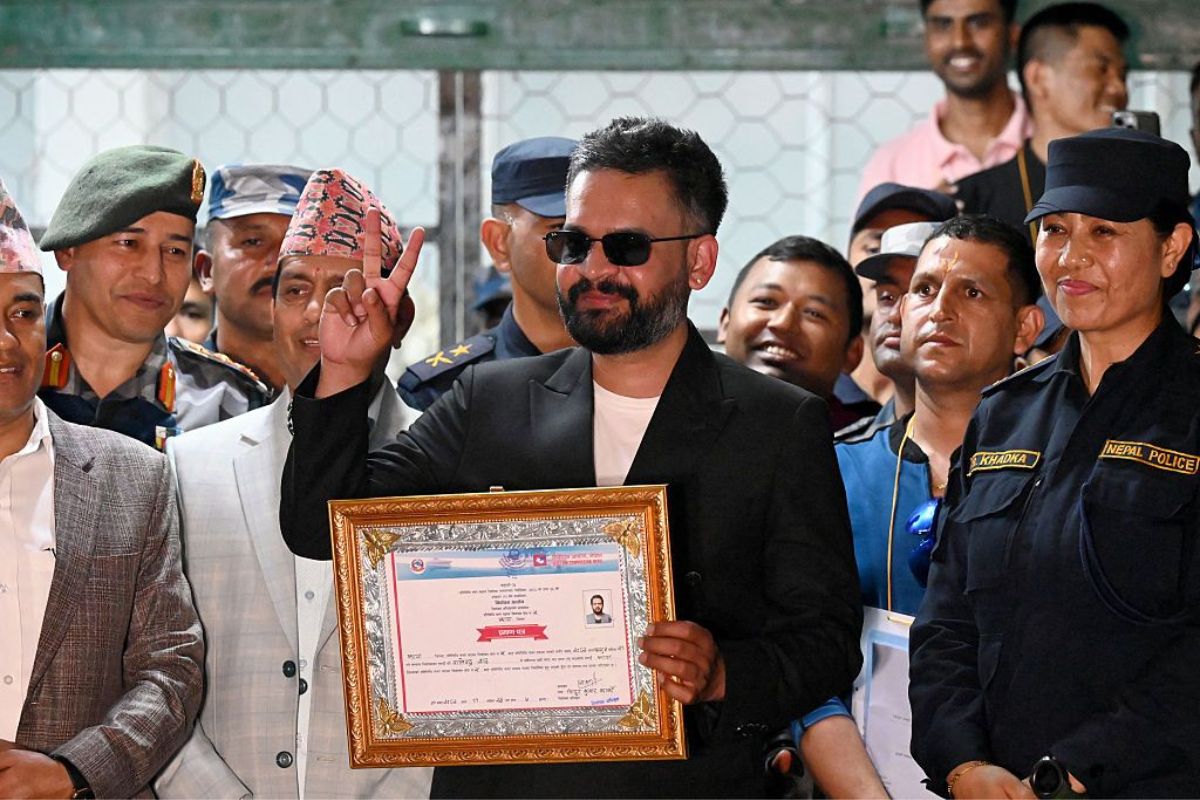
Rapper-Turned Politician Balen Shah Leads Party To Historic Nepal Election Victory

Nepal is stepping into a new and uncertain phase of its political journey following a historic election that has significantly transformed the country’s political landscape. The relatively young Rastriya Swatantra Party has emerged with a sweeping electoral victory, marking a dramatic shift away from the long-standing dominance of traditional political parties.
The party, which was established only four years ago, is led by rapper turned politician Balendra Shah, widely known as Balen. Against expectations, the party managed to secure a commanding majority despite Nepal’s complicated dual election system, an outcome that many political analysts had previously considered unlikely.
One of the most symbolic moments of the election came when Shah defeated former prime minister K. P. Sharma Oli in the Jhapa-5 constituency, an area widely regarded as one of Oli’s strongest political strongholds. For many observers, the result reflects growing dissatisfaction among voters who have become increasingly frustrated with what they see as decades of corruption, political stagnation and ineffective governance.
Supporters of the new political movement say the victory represents a strong desire among citizens for a different style of leadership and a new political culture. Many voters, particularly younger Nepalis, view Shah as a symbol of change and a break from the traditional political elite that has dominated national leadership for decades.
Despite the enthusiasm surrounding the election result, the overwhelming victory also places the country in largely uncharted territory. The Rastriya Swatantra Party remains a relatively inexperienced political force with limited governing history, yet it now faces enormous public expectations to deliver meaningful reforms in a short period of time.
At just 35 years old, Shah has only a few years of formal political experience, having served as mayor of Kathmandu for three years. For many supporters, his limited political background is not seen as a weakness but rather as proof that a new generation is ready to challenge the old system. Nevertheless, his tenure as mayor has not been without criticism. Human rights organizations previously raised concerns about the use of police during efforts by city authorities to remove street vendors and regulate informal businesses operating in the capital.
The global rights group Human Rights Watch has noted that such actions often illustrate the pressure that new leaders face when they attempt to demonstrate quick and visible results in office. Representatives of the organization have expressed hope that if Shah assumes national leadership, his administration will place greater emphasis on rule based governance and the protection of civil rights.
A key focus of the party’s agenda is an aggressive campaign against corruption. The party has pledged to investigate wealth accumulated by politicians since the 1990s and has suggested that assets obtained through illegal means could be confiscated by the state. The party is also proposing major reforms to Nepal’s judicial system, including eliminating political influence in the appointment of judges and introducing measures such as live streaming court proceedings to improve transparency.
Legal scholars such as constitutional expert Bipin Adhikari believe that Nepal’s institutions could support these reforms if there is strong political will. According to him, the civil service has been heavily politicized for years and many officials within the bureaucracy are increasingly eager to see meaningful changes.
Leaders of the new ruling party say they are already working on policies designed to encourage better cooperation with the civil service. Newly elected lawmaker Shishir Khanal has indicated that the party intends to introduce legislation that will reform how civil servants are rewarded and promoted, creating stronger incentives for productivity and professionalism within government institutions.
Economic reform is another major priority for the new leadership. Young people across Nepal, faced with limited employment opportunities at home, have placed significant hopes on the incoming government. Youth unemployment in the country remains around 20 percent, and nearly three million Nepalis currently work abroad in search of better opportunities.
Many citizens worry that the continued migration of skilled workers is turning into a serious brain drain that could weaken the country’s long term development. The party’s economic manifesto promises to accelerate growth by targeting an annual expansion rate of about seven percent, with the ambitious goal of transforming Nepal into a one hundred billion dollar economy within the next five to seven years.
Some economists, however, caution that these projections may be difficult to achieve. According to data from the World Bank, Nepal’s economy grew by about 4.6 percent in 2025 and could face slower growth in the coming years due to persistent political uncertainty, fluctuating tourism revenues and the country’s vulnerability to natural disasters.
Another economic challenge is Nepal’s heavy reliance on remittances from citizens working abroad. More than a quarter of the country’s gross domestic product is generated through money sent home by migrant workers, many of whom are employed in the Middle East.
Regional experts such as Nishchal N. Pandey of the Centre for South Asian Studies warn that geopolitical tensions in the region could threaten this critical source of income. A disruption in remittance flows, he cautions, could create serious economic pressures for the country.
Despite these concerns, leaders within the Rastriya Swatantra Party remain optimistic about the country’s prospects. Khanal has argued that simplifying business regulations and eliminating outdated laws could significantly boost investment and entrepreneurship. He believes that dozens of obsolete regulations could be removed or reformed quickly, noting that the current process of registering a company often requires navigating multiple government offices.
Even with its commanding electoral victory, the party may still face internal challenges. Many of its newly elected lawmakers come from diverse professional backgrounds and are newcomers to politics, raising questions about how cohesive the party will remain once it begins governing.
Observers such as Adhikari suggest that maintaining unity and discipline among party members could become one of the government’s most difficult tests. Inexperience in statecraft, he warns, may lead to competing ambitions among lawmakers.
Concerns have also been raised about the role of the opposition. With the new party dominating parliament, some analysts worry that weak opposition forces could limit oversight and reduce democratic accountability if independent institutions fail to hold the government to account.
Nepal’s foreign relations will also require careful management. The Himalayan nation sits strategically between two major regional powers, India and China, both of which exert significant influence in the region.
India’s prime minister Narendra Modi has already congratulated Shah and party president Rabi Lamichhane following the election victory, highlighting the importance of continued cooperation between the two countries.
Historically, Nepal has pursued a policy of neutrality, carefully balancing its relations with both Beijing and New Delhi. Leaders of the new government have indicated that this approach will remain unchanged, stressing that Nepal will maintain an independent foreign policy and will not align itself with any security alliances.
At the same time, the United States is also closely observing political developments in Nepal due to its strategic interests in South Asia and its concerns about China’s growing influence in the region.
For many citizens, especially younger voters, the election represents a rare opportunity to reshape the nation’s political direction. As Nepal enters this new political era, expectations are high and the country’s future will largely depend on how effectively the new leadership can translate popular support into meaningful reform.