




Latest News
Trump Edges Closer To Iran Conflict As Allies Press Him To Refocus on Economy

Trump moves closer to potential Iran war as aides urge economic focus before midterm elections.
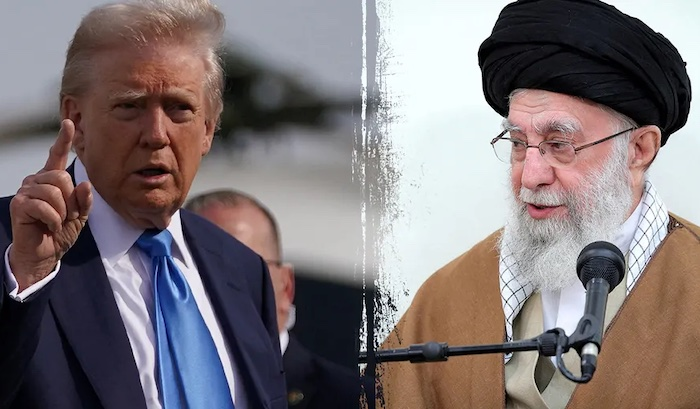
President Donald Trump has pushed the United States closer to potential conflict with Iran, even as senior aides and Republican strategists urge him to prioritise voters’ economic concerns ahead of November’s midterm elections.
Trump has ordered a significant military buildup in the Middle East, including aircraft carriers, warships and warplanes, while preparations are reportedly underway for a possible multi week air campaign targeting Iranian nuclear facilities.
However, the president has not fully outlined to the American public the specific justification for what could become the most aggressive US action against Iran since the 1979 Islamic Revolution.
A senior White House official said there is still no “unified support” within the administration for launching an attack, despite Trump’s increasingly forceful rhetoric.
Advisers are said to be wary of sending what one official described as a “distracted message” to undecided voters who remain more focused on inflation, housing costs and prescription drug prices.
At a recent private briefing attended by cabinet secretaries and Republican campaign officials, the economy was emphasised as the top political priority. Trump was not present at the meeting, according to a person familiar with the discussion.
In response to questions, another White House official defended the president’s foreign policy approach, saying it has produced “wins for the American people” and insisting that all actions are designed to put “America First” whether through national security or economic gains at home
November’s elections will determine whether Republicans maintain control of both chambers of Congress. Losing one or both to Democrats would significantly constrain Trump during the remainder of his second term.
Republican strategist Rob Godfrey warned that a prolonged conflict with Iran could pose political dangers for Trump, noting that much of his political base remains sceptical of foreign military entanglements after years of campaigning against “forever wars.” He said independent voters will also be closely watching how the president makes his case for any potential military action.
Although many in Trump’s “Make America Great Again” movement supported last month’s rapid operation that ousted Venezuelan President Nicolas Maduro, Iran represents a far more formidable adversary. Analysts say any escalation could carry higher military and political risks.
Trump has repeatedly threatened to strike Iran if it does not reach a new agreement over its nuclear programme. He reiterated that warning on Friday, saying Tehran “better negotiate a fair deal.” The United States previously targeted Iranian nuclear sites in June, prompting Tehran to warn of severe retaliation if attacked again.
Despite winning re-election in 2024 on promises to reduce inflation and avoid costly foreign conflicts, Trump has struggled to convince voters that prices are coming down, according to public opinion polls. Some Republican strategists argue that supporters may back military action if it is swift and clearly tied to protecting US security and economic stability.
Historically, foreign policy has rarely been decisive in midterm elections. But with substantial US forces already deployed to the region, Trump may face pressure either to act or risk appearing weak if Iran refuses to make concessions.
Critics say the administration has offered shifting and sometimes vague justifications for possible strikes, from responding to Iran’s crackdown on protests to demanding an end to uranium enrichment and even floating the idea of regime change. By contrast, they note, past administrations laid out more detailed public cases before major military interventions.
White House officials maintain that Trump prefers diplomacy and insists Iran must agree to a deal preventing it from developing nuclear weapons capability.
As tensions rise, both Trump’s political allies and his opponents will be watching closely to see whether he can balance the demands of foreign policy with the domestic economic concerns that many Americans say matter most.