




News
$5bn NLNG Train 7 Nears Completion As Nigeria Deepens Local Content

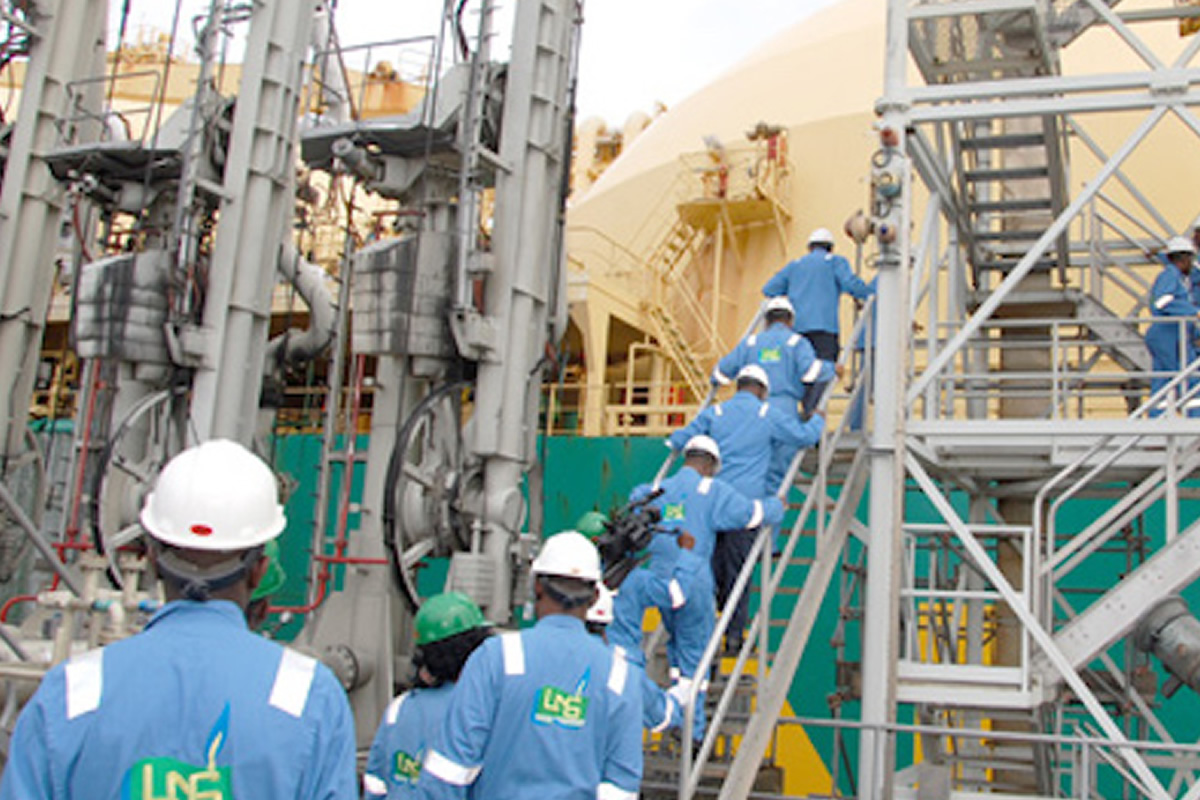
The $5 billion Nigeria Liquefied Natural Gas (NLNG) Train 7 project has reached 92 per cent completion and is now advancing into systems completion and pre-commissioning, marking a major milestone for Nigeria’s gas expansion drive and local content development.
That was as Nigerian Content Development and Monitoring Board (NCDMB) said the number of companies operating in the country’s upstream oil and gas sector had risen from less than 10 to 117, while service firms surged to 11,764 currently.
NCDMB credited the surge to the Nigerian Oil and Gas Industry Content Development (NOGICD) Act of 2010.
NLNG’s Project Director for Train 7, Mr. Ali Uwais, who represented the company’s Managing Director, Mr. Adeleye Falade, gave the project’s update in Lagos, at the 2026 Nigerian Oil and Gas Midstream and Downstream Summit in Lagos.
The event was organised by NCDMB under the theme, “Unlocking, Growing & Sustaining Nigerian Content Development in Nigeria’s Oil & Gas Midstream and Downstream Sectors.”
Uwais said the project, which faced years of delay and uncertainty, finally moved forward after front-end engineering commenced in 2018 and a reconfiguration introduced a common liquefaction unit that boosted capacity to the equivalent of two trains from the earlier era.
Final Investment Decision (FID) of the project was taken in December 2019 in Abuja, where its shareholders – Nigerian National Petroleum Company Limited (NNPC), Shell, TotalEnergies, and Eni – agreed to proceed with the landmark midstream gas project.
Uwais said, “In 2020, at the height of the COVID-19 pandemic, the engineering procurement and construction contract for the project was awarded to Saipem, Chiyoda and Daewoo Consortium.
“Despite global uncertainty, the shareholders remain committed that the project move forward, even under that Covid. Today, Train 7 is over 92 per cent complete.”
When operational, Train 7 is expected to raise NLNG’s production capacity from 22 million tons per annum (MTPA) to 30MTPA, representing a five per cent increase in the company’s export capacity.
Uwais said the project’s real significance lay in its impact on the Nigerian industry and capability, crediting deliberate collaboration with government agencies and private firms for the progress.
He said one of the most important decisions the company made earlier in the project was to treat Nigerian content not as a compliance obligation, but as a development opportunity. He stated that the decision shaped how they treated the project.
As the project required up to 4,000 tons of structural steel within a tight schedule, Uwais said Nigerian companies, such as Dorman Long, Aveon, African Industries, among others, supplied a significant portion.
He added that NLNG also invested in steel fabrication and galvanising facilities that will serve the wider industry after the completion of Train 7.
In addition, he said all medium and high voltage cables were manufactured locally by Nigerian companies, including Coleman, Mecom, Medgene, and Cable Metal, delivering substantial volumes.
Uwais acknowledged that local vendor capacity was tested during the execution of the project, and some challenges were identified.
Some local vendors, he said, presented difficulties with production capacity, quality standards, and delivery timelines.
He said in some cases additional interventions and technical oversight were required to meet the project standards.
Uwais pointed out that industries grew with such experiences and NLNG was eager to support them to surmount the challenges and deliver value to the project.
The NLNG official cited medium voltage cable production as an example of capability built during the project, saying the challenge also exposed gaps in cryogenic equipment manufacturing and testing.
To address the challenge, he said the project created opportunities for collaboration with Nigerian universities to deepen local research and technical competencies.
At peak construction, Uwais revealed that over 13,000 Nigerians were employed on Train 7, while thousands received training in welding, scaffolding, electrical work, and other specialist skills.
He also revealed that the project achieved 130 million man-hours safely, with only two lost time injuries recorded.
Uwais said, “No milestone is more important than the safety of our people. We continue to pass a simple message across the workforce: if you see something, say something, and do something.”
To avoid a post-project slump, he warned that the capacity built through Train 7 could be lost if Nigeria did not sustain investment in the oil and gas sector and broader industrial development.
Uwais stated, “The real value of Train 7 will be measured by what Nigeria does with the experience, skills, infrastructure, and industrial capacity built through this project.
“If we do not sustain investments in the oil and gas sector and wider industrial development, many of these gains will be lost.”
He warned that fabrication yards that expanded for the project could slow down, skilled workers could leave the industry or the country in search of opportunities, while local manufacturers, who invested to meet project standards, could also struggle without follow-on works.
He stated, “That is why this moment requires deliberate action. All relevant stakeholders must continue to create an environment that encourages investment and industrial growth.
“Industrial players must continue to trust and develop credible Nigerian companies. Regulators must continue to balance compliance with sustainable capability development. Nigerian companies, on their part, must continue to invest in quality, competence, safety, and delivery standards that can compete globally.”
Uwais said Train 7 should be remembered as more than a project milestone, hoping that it would not simply be remembered as a successful project, but remembered as proof that Nigeria could build, grow, and compete globally when government, industry, communities, and institutions work together with one voice.
He urged stakeholders to ensure the capacity and experience gained were not wasted after project completion.
Acting Manager, Midstream Monitoring arm of NCDMB, Mr. Patrick June, announced at the summit that the number of companies operating in the upstream oil and gas sector had risen from less than 10 to 117, generating 11,934 jobs for the country.
June added that service companies in the sector also grew to 11, 764, generating 129,240 job opportunities. He stated that the expansion of local content in the Nigerian oil and gas industry reflected the increasing participation of Nigerian firms across the value chain.
He stated, “For instance, Nigerian companies in the upstream sector, which were dominated by international and now national companies, were just less than 10. But as we speak, operating companies are about 117, with a job creation of 11,934. So, that is a significant improvement.”
June revealed that NCDMB’s database had currently captured hundreds of registered firms under the Joint Qualification System, 50 fabrication yards, 20 engineering design firms, and 122 manufacturing companies.
He added, “Local content has enabled significant growth in operating companies, service companies, individual registrations, fabrication yards, engineering firms, and manufacturing companies, increasing local content from less than five per cent in 2010 to 61 per cent in 2025.”
Earlier, in his opening remarks, Executive Secretary of NCDMB, Mr. Felix Ogbe, represented by Head of the Directorate of Planning, Research and Statistics, Austin Azuka, said the country was witnessing a transformation in the oil and gas value chain driven by reforms, policy clarity, stronger investor confidence, and deliberate efforts aimed at expanding indigenous participation.
Ogbe said while Nigeria had historically depended on crude oil exports and imported refined products, recent investments and policy reforms were changing that narrative, especially with the Dangote Petroleum Refinery coming online.
He stated that the board was broadening its local content agenda beyond upstream operations to deepen participation across the entire value chain.
Ogbe said, “However, as we continue to deepen Nigerian content, it has become increasingly clear that the next major frontier for sustainable economic growth, industrial expansion, employment generation, and national competitiveness lies significantly within the midstream and downstream sectors of the oil and gas industry.”
Ogbe said opportunities were expanding rapidly in gas gathering, processing, compression, transportation, storage facilities, pipelines, cooking gas, and compressed natural gas distribution, refining, petrochemicals, logistics, and retail operations.
He added that Nigeria was increasingly moving beyond being merely a producer of crude oil to becoming a processor and exporter of finished and semi-finished energy products.
Ogbe pointed to large-scale refining investments, modular refineries, gas commercialisation projects, domestic gas utilisation programmes, and petrochemical expansion as the latest trajectory in the energy sector.
He said, “One of the most notable achievements in this regard is the emergence of world-class refining infrastructure within our country, particularly the Dangote refinery, which stands today as one of the largest single-train refineries in the world and a major symbol of Nigeria’s industrial ambition, resilience, and capacity for self-sufficiency.”
Chief Executive of NMDPRA, Rabiu Umar, who was represented by Acting Executive Director, Economic Regulation and Strategic Planning, Olasupo Agbaje, said the sector had recorded substantial investments in recent years, particularly within gas processing and infrastructure development.
“What we have found over the years, and likely so within the last few years, is massive investment,” Umar stated. “And we are all seeing this happen. Massive investments in the oil and especially in the gas space,” he added.
Related