







Opinion
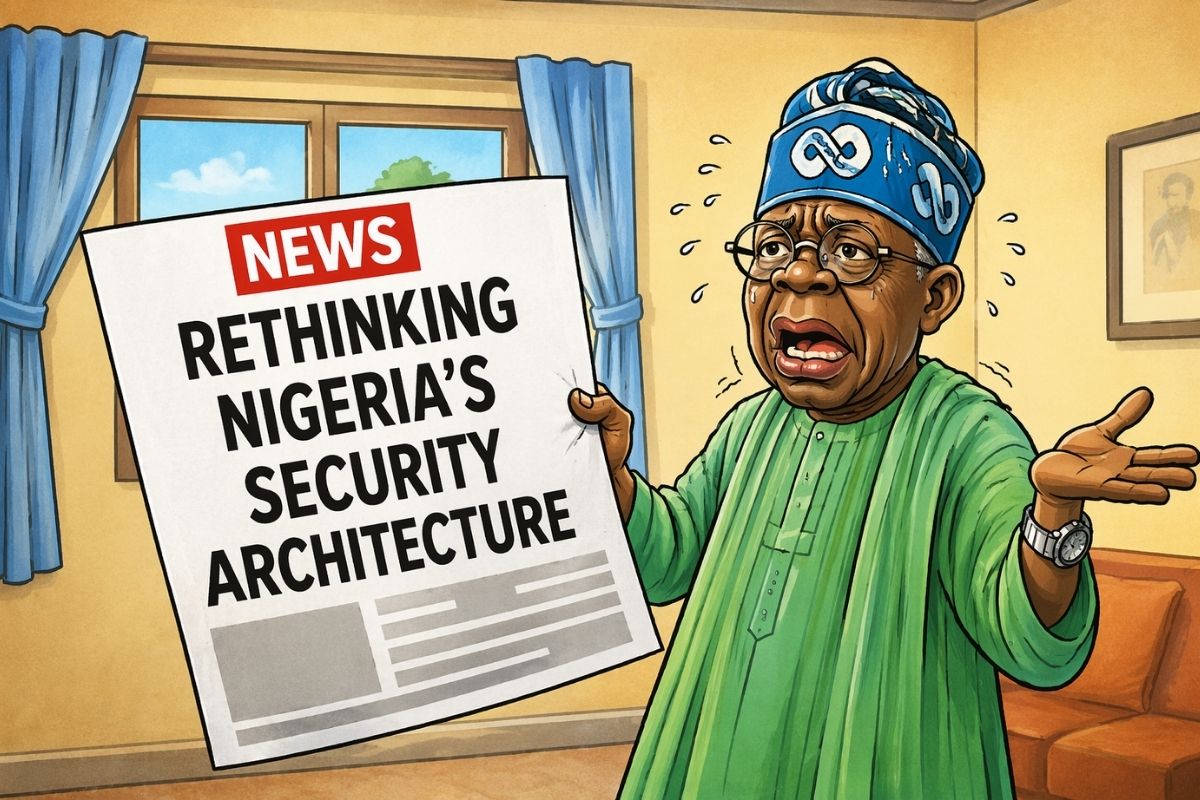
Rethinking Nigeria’s Security Architecture

Nigeria’s insecurity did not emerge overnight. It has grown steadily, shaped by a fragile mix of ethnic tension, religious extremism, and deep economic hardship. What began as isolated conflicts has evolved into a layered national crisis, stretching across insurgency, separatist agitation, and organised criminal networks. This is not merely a security failure. It reflects a deeper erosion of trust between the state and its citizens, where governance gaps have been repeatedly exploited and national resources turned into instruments of conflict rather than development.
In the early years of the Fourth Republic, the rise of ethnic militias appeared, at first, to fill a vacuum left by an overstretched and often ineffective policing system. Groups in different regions positioned themselves as protectors of local interests, but many quickly drifted into political manipulation and ethnic rivalry. By the mid-2000s, the Niger Delta crisis marked a turning point. Militancy in the region, driven by grievances around environmental degradation and resource control, introduced a more structured and economically motivated form of violence, targeting oil infrastructure and disrupting national revenue streams.
While the Amnesty Programme of 2009 brought relative calm to the Niger Delta, the country soon faced a far more devastating challenge in the North-East. Boko Haram’s transformation from a fringe ideological movement into a brutal insurgency altered Nigeria’s security landscape entirely. Thousands of lives were lost, millions displaced, and entire communities destabilised. In the South-East, renewed separatist agitation added another layer of tension, while across the North-West and North-Central regions, banditry and violent clashes between herders and farmers have grown into organised systems of terror, sustained by access to sophisticated weapons and lucrative ransom economies.
At the heart of this escalation lies a pattern of internal weaknesses. Corruption within the security framework has drained critical resources meant for operational effectiveness and personnel welfare. Justice has often been selective, allowing those who incite or benefit from violence to evade accountability. Nigeria’s extensive and poorly monitored borders have further complicated the situation, enabling the steady inflow of arms from unstable regions. Beyond institutional failure, political actors have, at times, deepened divisions by exploiting ethnic and religious identities for short-term gains, inadvertently strengthening the very forces that now challenge state authority.
The situation is further complicated by external influences. Terrorist affiliations linked to global networks have strengthened local insurgent groups with funding, strategy, and technical expertise. Arms trafficking networks have found fertile ground, while regional instability across the Sahel continues to spill into Nigeria’s borders. Although international bodies provide humanitarian support, their impact on ending hostilities remains limited by diplomatic constraints and the slow pace of multilateral interventions.
There is also a troubling connection between resource wealth and violence. In the Niger Delta, oil became both a source of grievance and a means of sustaining militancy. Today, a similar pattern is visible in the solid minerals sector. In parts of the North, illegal mining operations are closely tied to armed groups, with minerals exchanged for weapons in a cycle that fuels continuous conflict. This dynamic highlights a painful irony: resources that should drive national prosperity are instead financing instability.
The economic consequences are severe. Agriculture, once a cornerstone of Nigeria’s economy, has been disrupted as farmers abandon their lands out of fear. Food prices have surged, pushing more households into hardship. Investor confidence has weakened, as insecurity threatens supply chains and infrastructure. At the same time, the country continues to lose skilled professionals to safer environments abroad, weakening its capacity for long-term growth.
Successive administrations have approached the crisis with varying strategies, yet the outcomes have been uneven. While certain interventions achieved temporary relief, many failed to address the deeper structural causes. Heavy reliance on military responses has often suppressed symptoms without resolving underlying tensions. More recent efforts to introduce specialised security frameworks show promise, but they operate within a challenging economic environment that continues to push vulnerable populations toward crime.
A lasting solution will require a shift in thinking. Security must move beyond force to include intelligence, technology, and community engagement. Local policing structures, grounded in an understanding of terrain and culture, can significantly improve information gathering and response. Investment in surveillance technology can strengthen border control and monitor high-risk areas. At the same time, economic policies must address the root causes of vulnerability by creating opportunities, especially for young people who are often drawn into criminal networks out of necessity rather than choice.
Regional cooperation is equally important. Nigeria cannot isolate itself from the realities of its neighbours. A coordinated security framework across West Africa is essential to disrupt cross-border criminal operations and contain the spread of extremist ideologies.
Ultimately, the path forward is not only about security reform but about restoring fairness and trust. When citizens believe that resources are distributed equitably and that justice is consistent, the appeal of violent alternatives begins to fade. The real test for Nigeria in the coming years will not be the strength of its weapons, but the strength of its institutions and the credibility of its leadership. Only then can the nation move from managing insecurity to truly overcoming it.
Get Social! Follow us for more news