Latest News
Tinubu Reaffirms Nigeria’s 3 Million Bpd Oil Output Target By 2030

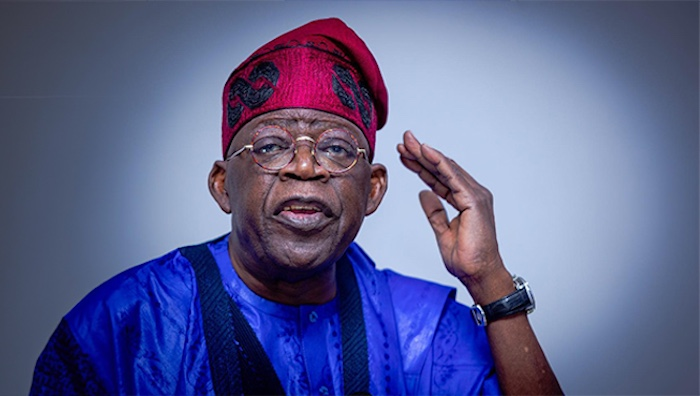
Nigeria has reaffirmed its ambition to raise crude oil production to 3 million barrels per day in the next five years, as the federal government intensifies reforms aimed at restoring investor confidence and repositioning the energy sector as a pillar of national growth.
President Bola Tinubu stated this on Tuesday in Abuja at the 9th Nigeria International Energy Summit (NIES) themed: “ Energy for Peace and Prosperity: Securing Our Shared Future.”
Represented by Vice President Kashim Shettima, Tinubu said his administration inherited an oil and gas sector constrained by inefficiencies, regulatory uncertainty and prolonged underinvestment, but had since taken decisive steps to reverse the decline.
He described energy as a strategic tool for national stability, noting that access, affordability and reliability were central to Nigeria’s economic and security objectives. According to him, the full implementation of the Petroleum Industry Act (PIA) has provided regulatory clarity, strengthened governance and restored investor confidence across the sector.
The President said Nigeria had also introduced transparent and competitive licensing rounds, which he described as among the most credible in the country’s history. He noted that upstream activity had rebounded strongly, with rig counts rising significantly and final investment decisions exceeding $8 billion in major oil and gas projects.
He said average crude oil production had improved to about 1.6 million barrels per day, supported by initiatives such as ‘Project One Million Barrels Per Day’, stressing that the government was working towards 2.5 million barrels per day by 2027, with a long-term target of 3 million barrels per day of liquid hydrocarbons and 12 billion cubic feet of gas per day by 2030.
He also highlighted progress in the gas sector, describing gas as Nigeria’s strategic transition fuel. Tinubu said domestic gas supply exceeded 2 billion cubic feet per day for the first time, strengthening power generation, industrial output and energy access.
He added that export volumes had increased alongside expanded gas processing and transportation infrastructure, reinforcing Nigeria’s position in regional and global gas markets. On refining, Tinubu said the commencement of full operations at the Dangote Petroleum Refinery marked a new era for domestic supply of petroleum products.
He said the rehabilitation of state-owned refineries had also gained momentum, while modular refineries were advancing under supportive regulatory frameworks, stressing that reforms such as fuel subsidy removal and foreign exchange liberalisation, though difficult, were necessary to restore market efficiency and long-term sustainability.
In his remarks, the Minister of State for Petroleum Resources (Oil), Senator Heineken Lokpobiri, said Nigeria had become investment-ready following far-reaching legal, regulatory and fiscal reforms.
Lokpobiri said the sector was struggling when the current administration took office, with declining production and stalled investments. He said the PIA provided a stable fiscal framework, while the upstream petroleum operations cost efficiency incentives order introduced tax credits to lower operating costs and improve competitiveness.
Lokpobiri said Project One Million Barrels Per Day had delivered rapid gains, with production rising to between 1.7 and 1.83 million barrels per day and active rig count increasing from 14 in 2023 to over 60.
He cited major final investment decisions, including Shell’s $5 billion Bonga North project and TotalEnergies’ Ubeta project, as evidence of renewed international confidence. According to him, four of the seven major final investment decisions announced across Africa between 2024 and 2025 were in Nigeria.
He also highlighted the successful transfer of onshore and shallow-water assets from international oil companies to Nigerian firms, which he said added about 200,000 barrels per day to output. Lokpobiri said subsidy removal had stabilised product availability and encouraged private investment in refining and downstream infrastructure.
Also, the Minister of State for Petroleum Resources (Gas), Ekperikpe Ekpo, said natural gas remained central to Nigeria’s energy security and economic transformation. Ekpo said Nigeria was pursuing a pragmatic energy transition that balanced climate responsibility with development needs.
He said gas production averaged between 7.5 and 7.6 billion standard cubic feet per day in 2025, while gas flaring declined to some of the lowest levels recorded in recent years.
According to him, expanded pipeline networks, processing facilities and gas-to-power projects had improved domestic utilisation and supply reliability. Ekpo said the government was targeting gas production of 10 billion standard cubic feet per day by 2030, positioning Nigeria as a regional energy hub.
The summit brought together African leaders, global energy firms, investors and development partners, including the President Adama Barrow, President of the Republic of The Gambia and Teodoro Obiang Nguema Mbasogo, President and Head of State of the Republic of Equatorial Guinea, who was represented.
In his remarks, the Group Chief Executive Officer of the Nigerian National Petroleum Company Limited (NNPC), Bayo Ojulari, stated that as an emerging global energy powerhouse, Nigeria has the responsibility to utilise its abundant gas resources to power Africa’s rise and contribute meaningfully to global stability.
“Nigeria’s pathway to a prosperous future lies in our collective ability to leverage our resource abundance, especially as gas sits at the heart of our strategy. It is our bridge to a cleaner future, our engine for industrialisation, and our foundation for export-led growth”, Ojulari stated.
Describing what he termed as Africa’s energy trilemma, Ojulari said though the African continent is endowed with vast energy resources, it still grapples with issues of accessibility, affordability, and sustainability, with over 600 million Africans living without access to electricity.
He said that with 37 billion barrels of crude oil and 209 trillion cubic feet of gas reserves, Nigeria and the NNPC are ready to lead the charge in changing the narrative.
“With over 600 million Africans still lacking electricity, the continent’s priority cannot be a copy and paste. Ours must be a just, equitable, people-centered energy addition, one that lifts our people out of poverty, powers industries, supports agriculture, transforms transportation, and unleashes the creativity of Africa’s youth”, he stated.
He said NNPC was not just a commercial entity but also a peace and prosperity enabler.
On steps being taken to enhance access to gas as the primary fuel for driving industrialisation and economic growth, the GCEO said NNPC has launched a new Gas Masterplan, while aggressively progressing strategic gas infrastructure projects such as the Obiafu-Obrikom-Oben (OB3), Ajaokuta-Kaduna-Kano (AKK) gas pipelines, and the Escravos-Lagos Pipeline System (ELPS) expansion.
“These projects are more than pipelines, they are highways for economic opportunity”, he explained.
Also speaking at the event, the Chairman of the Independent Petroleum Producers Group (IPPG) and Managing Director of Aradel Holdings, Mr. Adegbite Falade called on the federal government to urgently address the persistent bureaucracy and streamline multiple fees and charges faced by oil and gas operators in the country.
While admitting that some positive developments in the industry aided by government policy interventions, Falade said a few issues still discourage operators and make their operation difficult.
“In no particular order, we must continue to create an industry that allows the driving and the envelope of private capital to build our industry infrastructure.
“Without this, we will not be able to reach the massive gap in potential that we have to meet in our contribution to the nation’s GDP. Number two, if we are going to do this, we must reduce bureaucracy, we must streamline industry fees and related charges, just to make sure that operators remain competitive. Our industry today operates at a significantly elevated premium in cost relative to other non-share jurisdictions.
“We must address the issue of access to long-term and affordable capital. On this note, we’d like to applaud the support of the Federal Government of Nigeria, the Ministry of Petroleum Resources and other critical stakeholders in delivering the establishment of the Africa Energy Bank. We must sustain the tempo of this”, Falade said.
In addition, he said the county must ensure policy stability and adopt competitive fiscal frameworks that support resource monetization and stimulate interest rate growth.
He added that Nigeria must stay focused in building investor confidence through full and effective implementation of the Petroleum Industry Act (PIA), supported by strong, transparent and predictive regulatory institutions.
Besides, the African Petroleum Producers Organisation (APPO) has rolled out its ambitious goals for the $5 billion African Energy Bank (AEB) being headquartered in Nigeria ahead of the commencement of the multilateral financial institution by May 2026.
Secretary General of APPO, Mr. Farid Ghezali announced on Tuesday that the bank would mobilise $200 billion to support the gas transition and energy transformation of the continent, starting with the raising of $15 billion within three years by listing some major national companies and midstream projects in Africa.
Ghezali explained that the Bank was designed to unlock the $200 billion needed for the continent’s midstream-downstream project by 2030 and beyond.
“The African Energy Bank will allow the listing of shares of our national companies and flagship projects, such as the Dangote Refinery or the AKK Pipeline, for example. Our goal is to raise $15 billion in just three years with this increased liquidity”, he said.
Ghelazi said the bank will unify intra-African pricing for gas and oil, allowing member countries to achieve savings of up to 30 per cent on their energy imports and unlocking a potential gain of $1.4 billion for Africa.
According to the APPO SG, the Bank will connect African certified projects to the world’s largest sovereign wealth as well as to capital markets with structured equipment and public-private partnerships.
“Allow me to present to you our ambitions. The roadmap for the African Energy Bank, which is divided in three phases. Phase one, which, as I said in the first half of 2026, launches the African Energy Bank platform with 10-pillar projects involving countries such as Nigeria, Angola, Libya.
“APPO certification and integration of IOCs such as Shell or EnI. Phase two, in 2027, we plan to start a regional gas-oil trade, integrating the principles of the Basabi Declaration for 15 per cent local content.
“Phase three, reaching 2030, the African Energy Bank will be a true African financial hub, with $200 billion mobilised to support the gas transition and energy transformation of our continent. The quantified benefits speak for themselves. Project financing for billions of dollars, regional savings of around 30 per year of import costs, 500,000 direct jobs created in the local midstream, attractiveness for sovereign wealth and global investors.”
He affirmed that Africa has always proven its ability to achieve great things, citing the Nigerian Content Development and Monitoring Board (NCDMB) with its $5 billion in local contracts partnership with international oil companies (IOCs). This, described as an aspiring model for local contracts to partnership with IOCs.
According to Ghelazi, the realisation of large projects such as the Dangote Refinery, which was able to attract private capital once de-risked, are concrete proof that Africa’s project can and will attract local and international investors if we offer them the right framework.
He proposed to seal an Abuja Pact, a collective commitment by Nigeria and several other APPO member countries to launch and make the Africa Energy Bank full of energy by May 26.
“This pact will align perfectly with the discussions we will have ahead of May 26 on local content and regional gas diplomacy. It is by joining forces, pooling our resources, and encompassing this shared vision that Abuja and Nigeria can accept themselves as undisputed leaders in Africa energy financing”, Ghelazi added.
He pointed out that financing remains the main bottleneck hindering the development of Africa’s strategic projects.
According to him, more than 150 essential projects, from refineries to pipelines, such as the AKK pipeline, to gas infrastructure remain blocked because the cost of financing in Africa is 15-20 per cent compared to only 4-6 per cent in Asia.